Glycemic index food lists that are easy to use. Look up how 278 everyday foods affect blood sugar, find better swaps, and get food lists for the way you eat.
Food lists by GI
Browse by food
The glycemic index in 30 seconds
The glycemic index ranks carbohydrate foods by how fast they raise blood sugar, compared with pure glucose at 100. Low GI is 55 or less, medium is 56–69, and high is 70 or more.
Glycemic load adds portion size: watermelon has a high GI (76) but a GL of only 5 per slice.
Small swaps add up: sourdough for white bread, basmati for jasmine rice, rolled oats for cornflakes.
Why the glycemic index matters
Two foods with the same amount of carbohydrate can affect your blood sugar very differently. High-GI foods are digested quickly and cause a sharp rise, often followed by a dip that leaves you hungry again. Low-GI foods are digested slowly, so blood sugar rises gently and stays steadier. Choosing lower-GI versions of the foods you already eat is one of the simplest ways to even out your energy through the day.
Six swaps that make the biggest difference
| Instead of | Try | GI |
|---|---|---|
| White bread | Sourdough or pumpernickel | 75 → 50–54 |
| Jasmine rice | Basmati or parboiled rice | 89 → 38–58 |
| Instant oatmeal | Rolled or steel-cut oats | 79 → 52–55 |
| Cornflakes | Original All-Bran | 81 → 44 |
| Baked russet potato | Boiled new potatoes | 85 → 57 |
| Soft-cooked pasta | Pasta cooked al dente | 49 → 38 |
Carbs you don’t have to give up
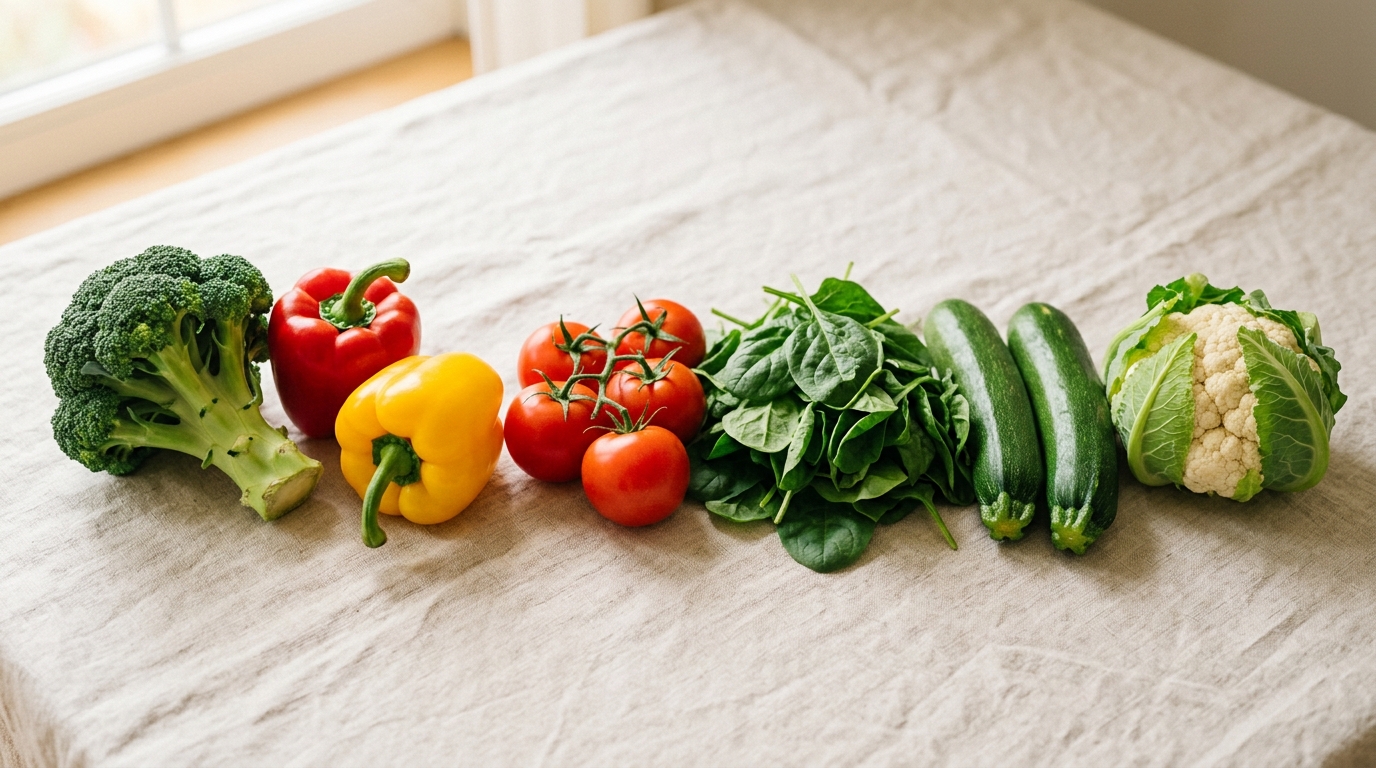
Eating with the glycemic index isn’t about living on broccoli. Some of the most satisfying carbs test lower than you’d expect, because how a food is made and cooked matters as much as what it’s made from.
Plain white spaghetti tests lower than brown rice (68). Its dense structure slows digestion, especially cooked al dente.Pearl barley · GI 28
The lowest-GI grain we list. Chewy, filling, and a natural swap for rice in soups, bowls, and risotto.Bulgur · GI 48
Precooked cracked wheat that still beats most rice. Ready in about 10 minutes.Pumpernickel & sourdough · GI 48–54
Dense, coarse rye and real fermented sourdough test far lower than white bread (75).Steel-cut oats · GI 52
The same oats turned into instant oatmeal test at 79. Processing, not the grain, makes the difference.Sweet corn · GI 52
Whole corn on the cob is a different food from corn flakes (81). A half cup has a GL of just 8.
Your refrigerator can help, too. When cooked pasta, rice, or potatoes are chilled overnight, some of their starch changes into resistant starch, which digests more slowly, and reheating doesn’t fully undo it. A 2026 randomized study in adults with type 1 diabetes found that pasta cooled for 24 hours and then reheated produced a lower blood sugar peak than freshly cooked pasta. It’s a small study and results vary between people, but it’s an easy habit to try with leftovers.
Read more: Why regular pasta has a low GI · Barley vs. rice · Cooling pasta, rice and potatoes
Food lists for your diet
Frequently asked questions
What is a low glycemic index food?
A food with a GI of 55 or less. Lentils, chickpeas, most fruit, rolled oats, sourdough, and pasta cooked al dente are all in the low range. See the full low GI food list.
Which matters more, glycemic index or glycemic load?
Use both. GI tells you how fast a food’s carbs act; glycemic load adjusts for how much you eat. Watermelon has a high GI but a low GL per slice, while a big plate of pasta has a low GI but a high GL. More in glycemic load vs. glycemic index.
Do meat, eggs, and vegetables have a GI?
Most don’t. Meat, fish, eggs, oils, and non-starchy vegetables contain so little carbohydrate that a GI can’t be measured, which makes them the easiest foods to build a low-GI meal around.
Can these lists help with diabetes?
They can help you understand how different foods affect blood sugar, and our diabetes-friendly food list and blood sugar chart are good starting points. Your own meal plan and targets should come from your doctor or dietitian.
Prefer it on paper?
Printable glycemic index food lists, organized into low, medium, and high GI, are available through Health List Now.
Glycemic Edge provides general information, not medical advice. See our medical disclaimer. · Sitemap