
This blood sugar chart shows the ranges used to identify normal blood sugar, prediabetes, and diabetes, using the three standard tests: fasting glucose, the 2-hour glucose tolerance test, and A1C. Values are shown in mg/dL, used in the US, and mmol/L, used in most other countries.
- Blood sugar chart
- Ranges table
- Targets with diabetes
- Low blood sugar
- After meals
- Food and blood sugar
- FAQ
Normal fasting blood sugar: 70–99 mg/dL (3.9–5.5 mmol/L)
Prediabetes: fasting 100–125 mg/dL, 2-hour test 140–199 mg/dL, or A1C 5.7–6.4%
Diabetes: fasting 126 mg/dL or higher, 2-hour test 200 mg/dL or higher, or A1C 6.5% or higher
Blood sugar chart
Blood sugar ranges table
| Test | Normal | Prediabetes | Diabetes |
|---|---|---|---|
| Fasting glucose after 8+ hours without food |
70–99 mg/dL 3.9–5.5 mmol/L |
100–125 mg/dL 5.6–6.9 mmol/L |
126+ mg/dL 7.0+ mmol/L |
| 2-hour glucose test (OGTT) 2 hours after a 75 g glucose drink |
Under 140 mg/dL under 7.8 mmol/L |
140–199 mg/dL 7.8–11.0 mmol/L |
200+ mg/dL 11.1+ mmol/L |
| A1C average over about 3 months |
Under 5.7% | 5.7–6.4% | 6.5% or higher |
| Random glucose any time of day |
— | — | 200+ mg/dL with classic symptoms 11.1+ mmol/L |
Ranges for non-pregnant adults, based on American Diabetes Association diagnostic criteria. A diagnosis is made by a healthcare provider and is usually confirmed with a repeat test. Pregnancy uses different ranges.
Common blood sugar targets for people with diabetes
| Measure | Common target for many adults |
|---|---|
| Before meals | 80–130 mg/dL (4.4–7.2 mmol/L) |
| 1–2 hours after starting a meal | Under 180 mg/dL (under 10.0 mmol/L) |
| A1C | Under 7% |
| Time in range (continuous glucose monitor) | Most of the day between 70 and 180 mg/dL (3.9–10.0 mmol/L) |
These are general targets from the American Diabetes Association. Your own targets may be higher or lower depending on your age, health, medications, and history of low blood sugar. Your healthcare team sets them with you.
Low blood sugar (hypoglycemia)
Blood sugar below 70 mg/dL (3.9 mmol/L) is considered low, and below 54 mg/dL (3.0 mmol/L) is significantly low. Common signs include shakiness, sweating, a fast heartbeat, hunger, confusion, and irritability. It mostly affects people taking insulin or certain diabetes medications.
If you’ve been diagnosed with diabetes, follow the low blood sugar plan from your healthcare team. A widely used approach is the 15-15 rule: take 15 g of fast-acting carbohydrate, such as glucose tablets, 4 oz (120 ml) of juice or regular soda, or a tablespoon of sugar or honey, then recheck in 15 minutes. This is one of the few times high-GI foods are the right choice. Severe low blood sugar, with confusion, seizures, or loss of consciousness, is a medical emergency.
How blood sugar changes after meals
In people without diabetes, blood sugar typically rises after a meal, peaks within about an hour, and returns close to its starting level within two to three hours, usually staying under about 140 mg/dL (7.8 mmol/L). With prediabetes, the rise tends to be higher and slower to settle. With uncontrolled diabetes, it can start higher and stay elevated for hours.
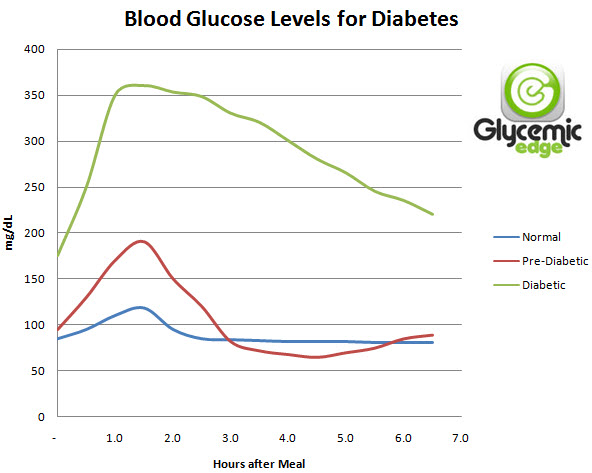
How food affects blood sugar
Carbohydrate is the part of food that raises blood sugar most directly, and not all carbohydrate acts the same way. The glycemic index ranks foods by how fast they raise blood sugar, and glycemic load adjusts for portion size. Choosing lower-GI carbs, eating them with protein, fat, and fiber, and keeping portions moderate all help keep after-meal rises smaller.
Frequently asked questions
What is a normal blood sugar level?
For adults without diabetes, a normal fasting level is 70–99 mg/dL (3.9–5.5 mmol/L), and blood sugar two hours after eating is usually under 140 mg/dL (7.8 mmol/L).
What blood sugar level is prediabetes?
A fasting level of 100–125 mg/dL, a 2-hour glucose test result of 140–199 mg/dL, or an A1C of 5.7–6.4%.
How do I convert mg/dL to mmol/L?
Divide mg/dL by 18. For example, 126 mg/dL ÷ 18 = 7.0 mmol/L. To go the other way, multiply mmol/L by 18.
Can a home glucose meter diagnose diabetes?
No. Home meters and continuous monitors are useful for tracking, but diabetes is diagnosed with laboratory tests ordered by a healthcare provider. If your home readings are often in the prediabetes or diabetes range, talk to your doctor.
Ranges are based on American Diabetes Association Standards of Care. This page is general information, not medical advice; see our medical disclaimer. Last reviewed October 2026.