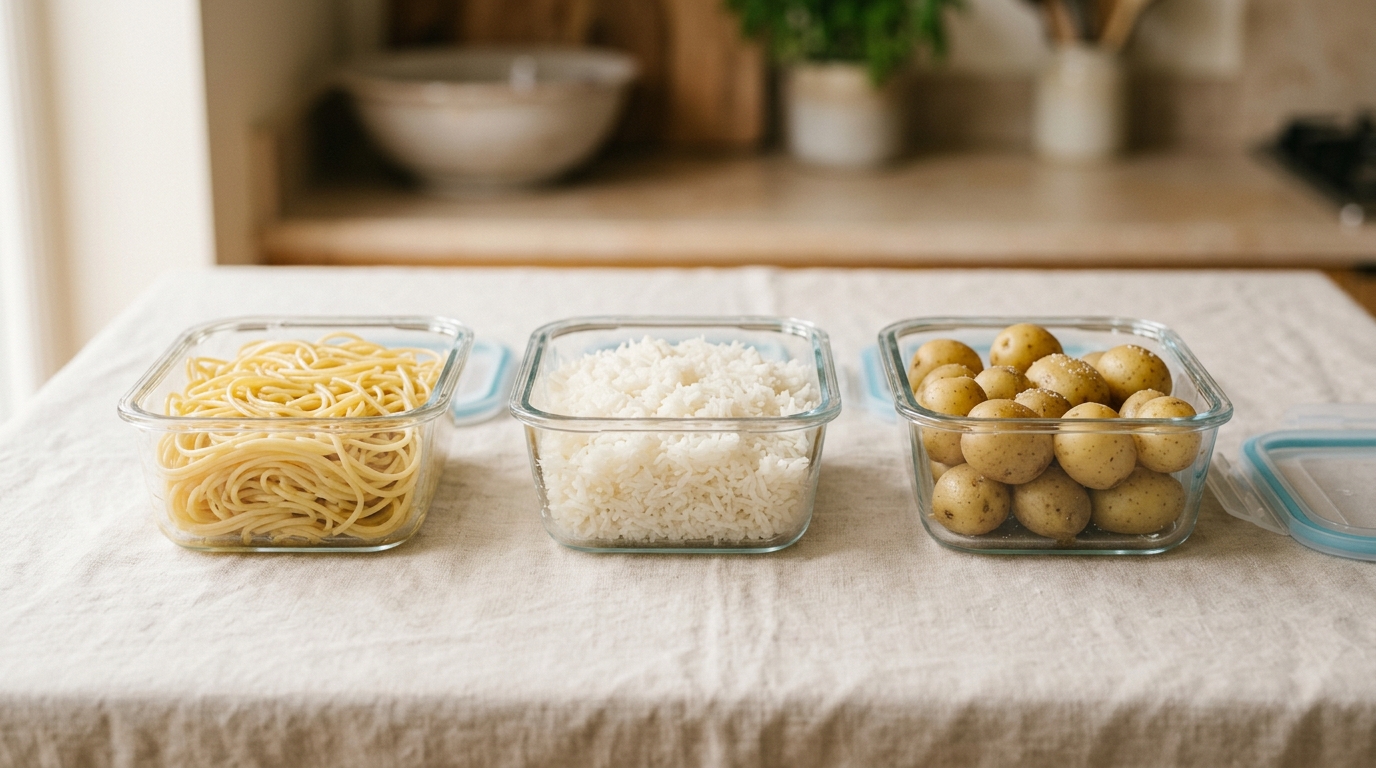
Here’s a blood sugar trick that costs nothing: cook your pasta, rice, or potatoes ahead, chill them overnight, and reheat them. Cooling changes some of their starch into resistant starch, which your body digests more slowly, and reheating doesn’t fully reverse it. The effect is modest and varies between people, but the research behind it is real, and so are a few food-safety rules worth knowing.
What happens: cooling cooked starch forms resistant starch (a process called retrogradation)
Best evidence: a 2026 randomized study in adults with type 1 diabetes found a lower blood sugar peak from cooled-then-reheated pasta
How long: studies chill food for about 24 hours in the refrigerator
What cooling does to starch
When starchy food is cooked, its starch granules absorb water and swell, which makes them easy for digestive enzymes to break down into glucose. As the food cools, some of that starch re-forms into tight, crystal-like structures. Enzymes can’t break those down in the small intestine, so part of the starch passes through like fiber instead of becoming blood sugar. This resistant starch is fairly heat-stable, which is why reheated leftovers keep some of the benefit.
What the studies show
| Food | Who was studied | What they found |
|---|---|---|
| Pasta, cooled 24 h then reheated | 32 adults with type 1 diabetes (2026) | More resistant starch; lower blood sugar peak and smaller rise than freshly cooked pasta |
| White rice, cooled 24 h then reheated | 32 adults with type 1 diabetes (2022) | Smaller rise in blood sugar after the meal, but more low-blood-sugar episodes with the usual insulin dose |
| Pasta, hot vs. cold vs. reheated | Healthy adults (2019) | Reheated pasta gave a lower overall blood sugar response than fresh; cold pasta was in between |
| Pasta, chilled then reheated | 8 healthy young men (2022) | No significant difference from fresh pasta |
| Boiled potatoes eaten cold | Healthy adults | Lower blood sugar response than hot potatoes, lower still with a vinegar dressing |
These are small studies, and results aren’t consistent across all of them. Treat cooling as a helpful habit, not a way to make starchy foods unlimited.
How to do it
- Cook as usual, ideally pasta al dente and potatoes boiled rather than baked, since those start lower.
- Cool it quickly. Spread it out in a shallow container so it cools fast, and get it into the fridge within an hour for rice and within two hours for pasta and potatoes.
- Refrigerate overnight, about 12–24 hours. That’s the window most studies used.
- Eat it cold or reheat it. Pasta salad, potato salad, and cold rice dishes work, or reheat until steaming hot.
- Keep the rest of the meal balanced. Protein, vegetables, and a little fat still do more than cooling alone.
Food safety for leftovers, especially rice: cooked rice can carry spores of Bacillus cereus, which survive cooking and can produce toxins if rice sits warm. Cool rice quickly and refrigerate it within about an hour, eat it within 24 hours, and reheat it only once, until steaming hot all the way through. Refrigerated pasta and potatoes keep 3–4 days.
If you use insulin: a smaller or slower blood sugar rise can mean your usual mealtime dose is more than you need. In the cooled-rice study, participants had more low-blood-sugar episodes. Talk with your diabetes care team before changing how you prepare carbs, and watch your readings closely when you do.
Easy ways to use it
- Pasta: cook a double batch on Sunday and reheat portions for lunch, or make a pasta salad with vegetables and olive oil.
- Rice: day-old rice is what fried rice is supposed to be made with anyway.
- Potatoes: boil small new potatoes with the skins on, chill them, and toss them in a vinegar-based dressing.
Frequently asked questions
Does reheating cancel out the resistant starch?
Not completely. Some resistant starch survives reheating, and in at least one study reheated pasta produced a lower blood sugar response than fresh or cold pasta.
Does cooling make pasta or potatoes low GI?
It lowers their effect somewhat, but it won’t turn a high-GI food into a low-GI one. A cooled baked russet is still higher than a fresh serving of lentils. Choosing a lower-GI food to begin with makes the bigger difference.
How long do I need to chill it?
Most studies used about 24 hours in the refrigerator. Overnight is a practical target.
Related: why regular pasta has a low GI · barley vs. rice · potatoes and starchy vegetables
This page is general information, not medical advice. Last reviewed October 2026.