
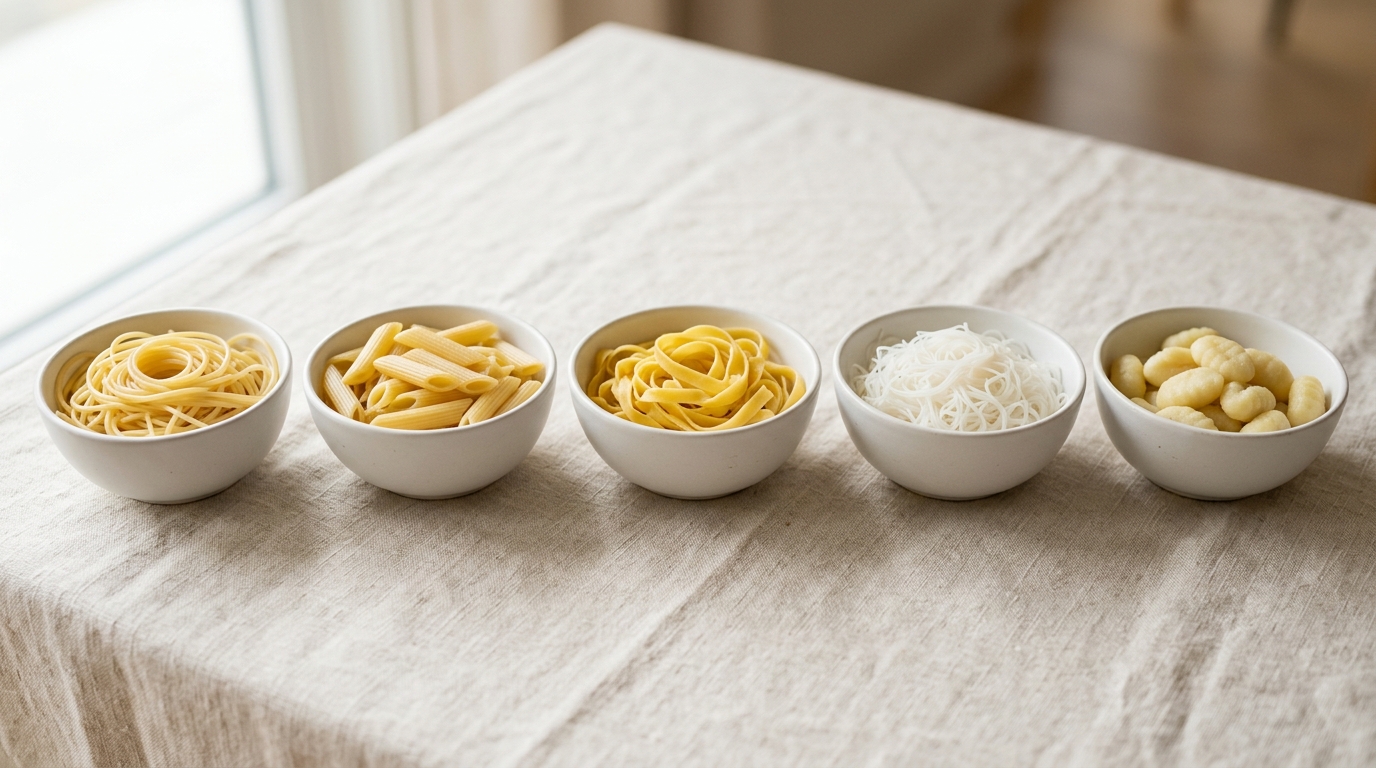
Pasta has a reputation as a blood sugar problem, but plain wheat pasta is one of the lowest-GI starches you can eat. White spaghetti averages a GI of 49, and cooked al dente it drops to 38. That’s lower than brown rice (68), white bread (75), or a baked potato (85). The reason is how pasta is made, and how you cook it matters almost as much.
Regular spaghetti: GI 49 on average, 38 cooked al dente
Brown rice, for comparison: GI 68
The catch: portion size. A typical plate still carries a medium-to-high glycemic load.
Pasta vs. other starches
| Food | GI | GL | Serving |
|---|---|---|---|
| Spaghetti, al dente | 38 | 18 | 180 g cooked |
| Fettuccine, egg | 40 | 18 | 180 g cooked |
| Spaghetti, whole wheat | 42 | 17 | 180 g cooked |
| Spaghetti, white (average) | 49 | 24 | 180 g cooked |
| Brown rice | 68 | 22 | 150 g cooked |
| White rice, long-grain | 73 | 26 | 150 g cooked |
| White bread | 75 | 11 | 1 slice (30 g) |
| Corn pasta, gluten-free | 78 | 33 | 180 g cooked |
| Baked russet potato | 85 | 26 | 150 g |
| Brown rice pasta, gluten-free | 92 | 35 | 180 g cooked |
GI: low 55 or less, medium 56–69, high 70+. GL per serving: low 10 or less, medium 11–19, high 20+. Full values on the pasta and noodles page.
Why pasta digests slowly
Dense dough, pressed tight. Dried pasta is made from durum wheat semolina pushed through a die under pressure, then dried. That leaves a compact structure where starch granules sit inside a network of gluten protein. Digestive enzymes have to work their way in from the surface, so glucose is released gradually.
Bread is the opposite. It’s made from similar wheat, but yeast and baking turn it into an airy sponge with a huge surface area for enzymes to reach. That’s why white bread tests at 75 while white spaghetti tests at 49.
Gluten-free pasta loses the advantage. Without the gluten network, pastas made from rice or corn digest quickly. Corn pasta tests at 78 and brown rice pasta at 92.
How cooking changes it
- Al dente is lowest. Spaghetti cooked firm tests around 38. Cooked soft, the average rises to 49, and well-done pasta has tested as high as 61.
- Leftovers may be lower still. Chilling cooked pasta overnight turns some starch into resistant starch. A 2026 randomized study in adults with type 1 diabetes found cooled-then-reheated pasta gave a lower blood sugar peak than fresh. More in our guide to cooling pasta, rice, and potatoes.
- What goes on it counts. Protein, olive oil, and vegetables slow digestion of the whole meal. A meat or bean sauce with vegetables beats a bowl of plain buttered noodles.
The catch: portion size
Low GI doesn’t mean low carb. A 180 g serving of cooked spaghetti, about 1¼ cups, has 40–50 g of carbohydrate, so its glycemic load lands at 18–24. Restaurant plates are often twice that. The low GI helps most when the portion is reasonable: about 70 g (2½ oz) of dry pasta per person, with plenty of vegetables and protein alongside.
How I cook pasta for a lower GI
- Buy plain dried durum wheat pasta, regular or whole wheat.
- Weigh about 70 g dry per person.
- Start tasting two minutes before the package time and drain while it still has a little bite.
- Make the sauce do the heavy lifting: protein plus at least one vegetable.
- Cook extra, refrigerate it, and reheat it for lunch the next day.
Frequently asked questions
Is white pasta really low glycemic?
Yes. Plain white durum wheat spaghetti averages 49, inside the low range, and about 38 when cooked al dente. Its GL per serving is medium to high, so portion size still matters.
Is pasta better than rice for blood sugar?
Gram for gram of carbohydrate, regular pasta usually tests lower than most rice: 38–49 versus 68 for brown and 73 for long-grain white. Parboiled rice (38) and pearl barley (28) are the exceptions. See barley vs. rice.
Is whole wheat pasta lower GI than white?
Slightly: 42 versus 49 on average. Cooking either one al dente makes a bigger difference. Whole wheat adds fiber.
Is pasta OK if I have diabetes?
Many people with diabetes include pasta in measured portions, cooked al dente and eaten with protein and vegetables. How much fits your plan is a question for your doctor or dietitian.
GI values vary between tests. This page is general information, not medical advice. Last reviewed October 2026.